
Imagine – the future of human remains from colonial contexts
Imagine
The future of human remains from colonial contexts
The preservation and exhibition of human remains in museums is a painful open wound for many descendant communities, especially those from former colonies. Any museum that stewards such human remains, like Museum Vrolik, must respond to its racist and colonial inheritance, including by researching the provenance of the remains and sharing the findings. This exhibition is a result.
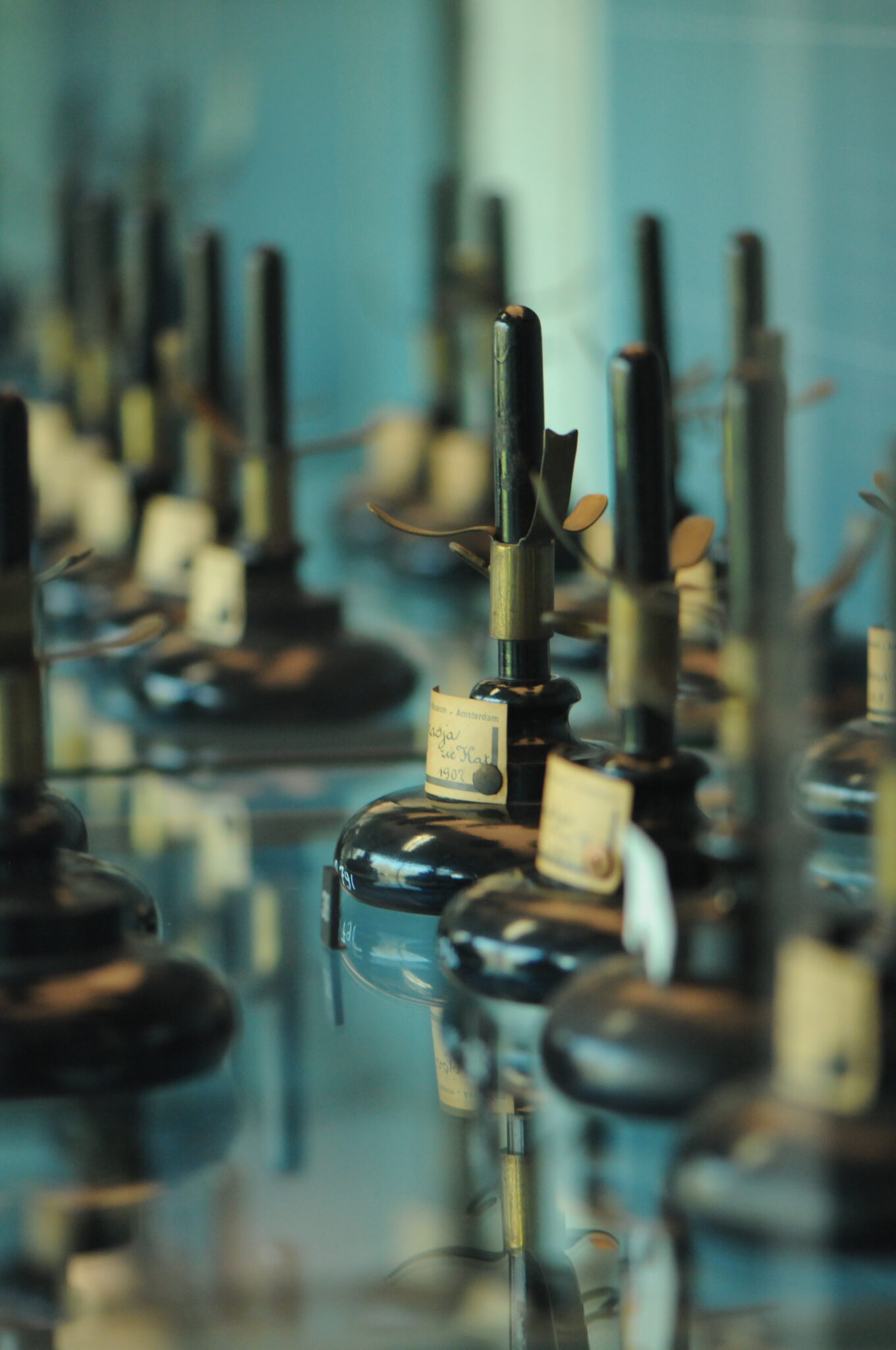
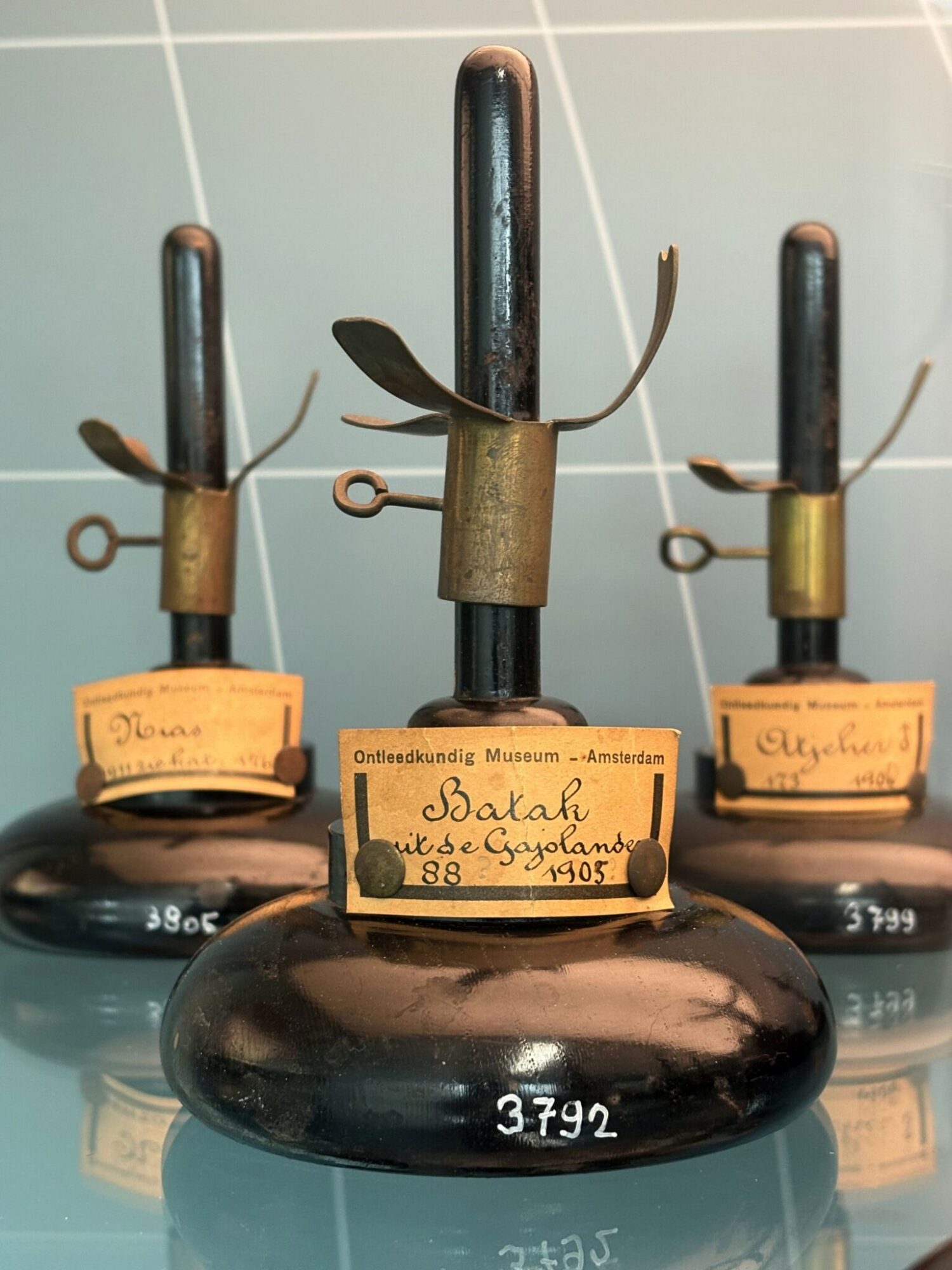
Imagine a future in which all racialized human remains find a final resting place. What remains? Display cases with empty stands and labels – direct evidence of the racial collecting mania of Museum Vrolik’s anatomists in the nineteenth and early twentieth centuries. These objects are essential, as they will show future generations how medical doctors contributed to racist and colonial science. Through captions linked to stands, we move beyond the objectification and racial categorization of remains, showing their humanity and, at the very least, to tell their histories.
The five-year project ‘Pressing Matter, ownership, value and the question of colonial heritage in museums’ included provenance research on these human remains. Investigation of archives and publications, museum labels and catalogues, and even inscriptions on the remains themselves revealed a great deal of information. A forensic approach also helped to answer questions about whether the remains came from a cemetery or through colonial warfare, or from local traditions of decorating and preserving human remains, such as in Papua. Communities of origin, including diaspora communities, were involved in the research. They provided many answers, and new insights, such as about the important, enduring spiritual connection between ancestors and present-day communities.
An important goal of this project was to begin healing the wounds of colonial injustice and scientific racism. We do so by addressing these histories openly, and, above all, by working with communities of origin to find the best resting place for the remains of their ancestors. For some, that means restitution. To date, Museum Vrolik has collaborated on three restitutions: to Schokland (Netherlands) in 2003, to Aotearoa (New Zealand) in 2019, and to Tanimbar (Moluccas, Indonesia) in 2024. More restitutions are in process.
Results provenance research 2018-2025
Despite extensive research, we still do not exactly know the origins of all the human remains in the collection. Even when we do know, present political situations may not always allow for restitution. As a result, some human remains from colonial contexts will remain in Museum Vrolik’s depot for now. Together with communities of origin, we are looking at how we can create a respectful resting place in the depot. Nonetheless, provenance research on the remains continues. Healing colonial injustice requires care and patience – and may never be fully completed. Click on the link to read more about the results of the study:
What now?
In the past, studying human remains in medical collections was the only way to understand diseases and abnormalities in the human body. Museum Vrolik’s collection contributed to advances in medical science.
However, these stories of racialized and stolen skulls also show how racist the research of Gerard and Willem Vrolik and their successors was. The consequences of this research in the nineteenth and early twentieth centuries continue to influence how people of color are thought about, even today.
Moreover, people with disabilities and people belonging to socially marginalized groups were viewed as inferior by these doctors and scientists in this period. Their perspectives and preferences were ignored, just as those of descendant communities in colonial contexts. Finally, human remains in this collection were collected before present-day norms and laws about informed consent were in effect.
As a museum we still believe that it is important to show historical anatomical collections to the public. But the context of collection, including the diverse perspectives of marginalized groups, must be added. We are committed to working on this.
Now that we know this history, we ask you: should we keep the name ‘Museum Vrolik’? Is another name better? How can we change this museum to better throw light upon these diverse perspectives? Use your imagination and give your opinion via the contactform or email us at Museumvrolik@amsterdamumc.nl.


